I speak that distilling is not just craft. It is child of art and science like perfumes are. Preparation for distilling is checking your plants in which state they are, how weather is for next few days and just be patient. You cannot crop your plants on any day or even part of the day. You need to know when your plants are ready to be harvested and it have a lot of parameters to be considered. One of them is part of the day and amount of the sun. Helychrisum is collected at the sun on the peak when plants are full of essential oil. This and many other parameters will decide the quality of your oil which is presented trough gas chromatography.
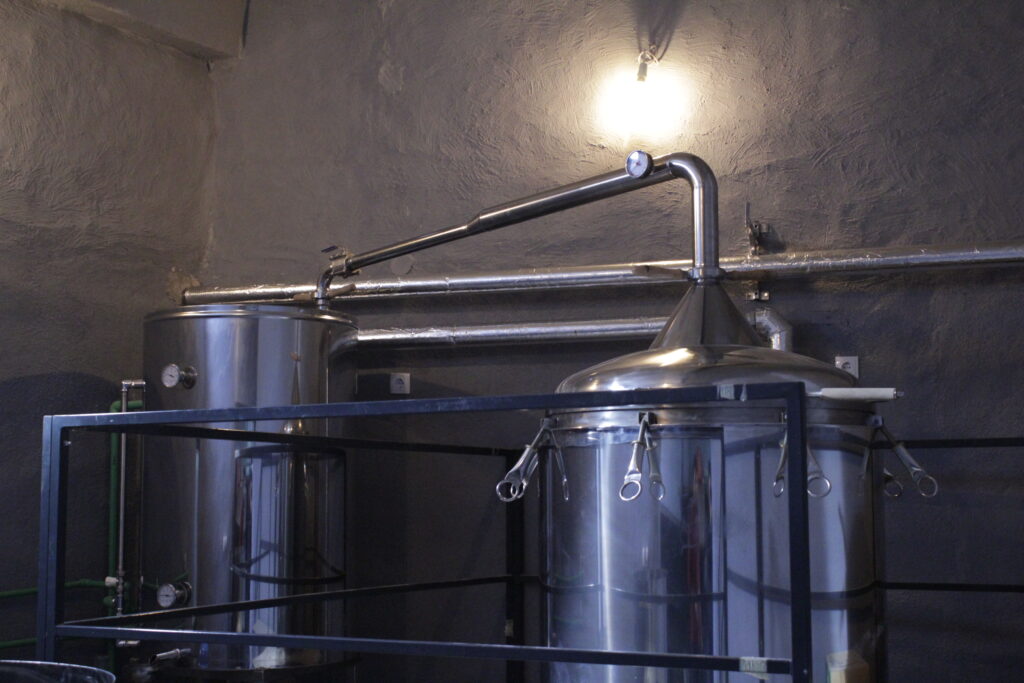
Taking everything in consideration and you have done your job well it comes to steam and gleam. Distill, shiny and ready to be filled with fresh harvested plants. It always must be done as soon as possible after the harvest and when I mean that I mean just few hours at top. Plants are filled in boiler and steam generator runs steam trough plants. Same steam goes through cooling unit and essential oil mixed with hydrolate is going in Florentine vessel which separates oil from hydrolate by using pure density (oil is lighter so it goes up and separate itself from hydrolate). It sounds very simple, but in practice it is not as you need to know how much steam pressure and when you need to deliver, which valve you need to open or muffle to obtain high yield. Colling unit need to have specific input and output temperature and flow must be at specific parameters. I guess these machines have soul of their own as when you learn to work on one of them it is not simple to work on another one. They are not massively produced; they are all handmade crafted machines according to customer whished. There is no same as this one and I like mine.
As we are very oriented to be environmentally friendly company, we adapted our facility to be self-sufficient as much it can be. We excavated 30.000-liter tank which was excavated in the end of 19th century by my ancestors and have been filled with huge stones in one part of 20th century. It was used to collect rain and after more than 100 years we are back with same idea. As it was inside of the building, we could not use big excavator and it was not job for small one as it reach is small. Unfortunately, we did it by our hands. Me and my friends spend our vacation to dig last stone from it and I adapted our plant to collect rain which is then pumped into the steam generator who use it for production. Same water is used for cooling either as tank is basically carved in stone and water is at steady 12C. All system is set that used water from cooling unit is separated then brought back to tank again to be used for cooling again. It is small step in being more self-sufficient and to preserve our nature.
